Marble plaster walls use slaked lime and marble dust to recreate the look and feel of genuine Italian marble, at roughly a third of the price. In this guide, you will find UK costs, a step-by-step application process, the top 10 benefits, common mistakes to avoid, and honest advice from over 20 years of hands-on experience. Explore Hikitia Surface Design to see our full range of finishes, or get in touch for a free quote.
Table of Contents
- What Are Marble Plaster Walls?
- How Is Marble Plaster Applied? (Step-by-Step)
- How Much Do Marble Plaster Walls Cost in the UK?
- Top 10 Benefits of Marble Plaster Walls
- Is Marble Plaster Worth It? Marble Plaster vs Real Marble
- What Are the Most Common Marble Plaster Mistakes?
- Can You Use Marble Plaster in Bathrooms?
- What Are the Best Alternatives to Marble Plaster Walls?
- How Long Does Marble Plaster Last, and How Do You Maintain It?
- What Marble Plaster Trends Should You Watch in 2026?
- Frequently Asked Questions
What Are Marble Plaster Walls?
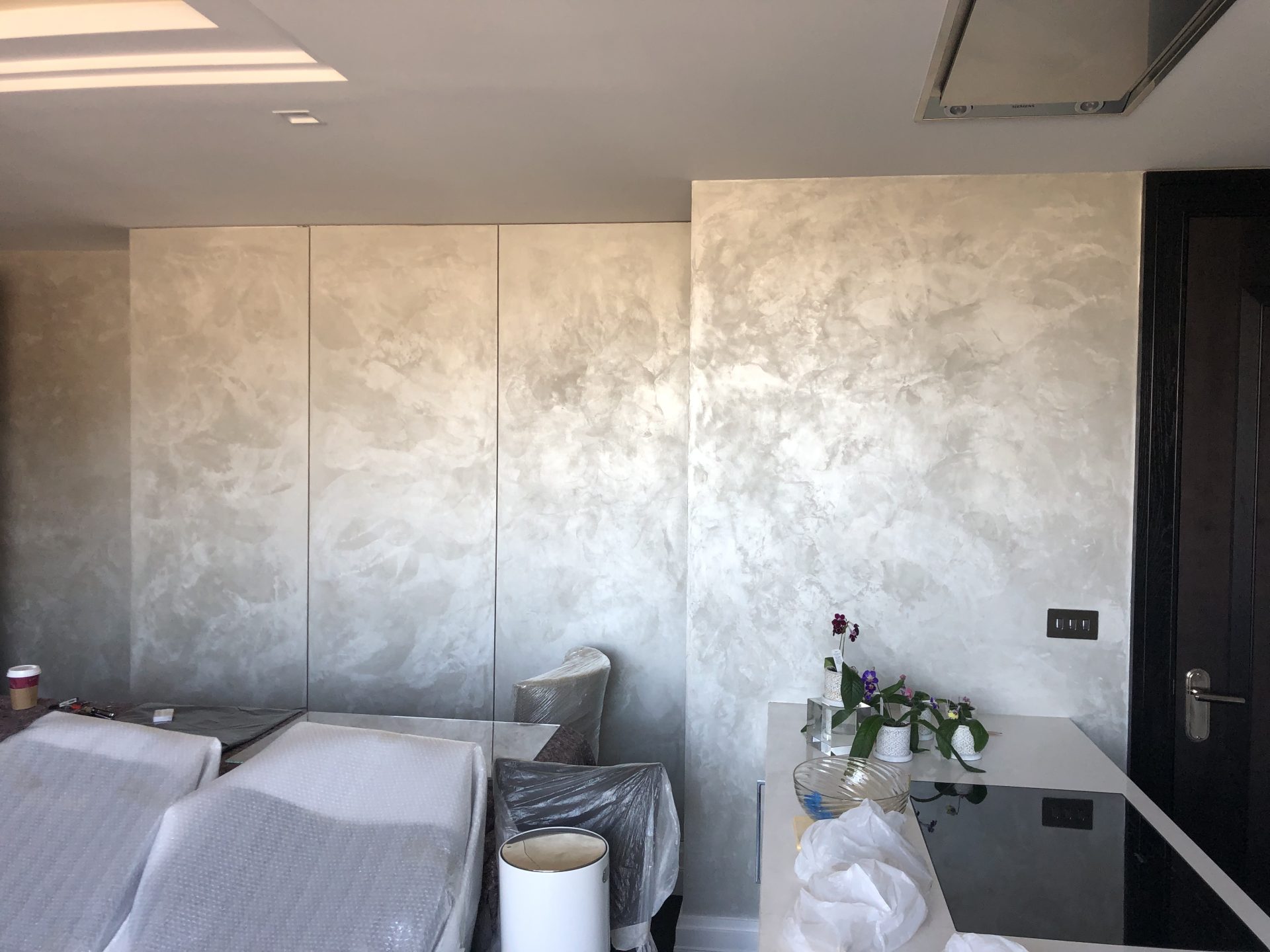
Marble plaster walls are a decorative wall finish made from slaked lime and marble dust, applied in multiple thin layers and polished to create the look of genuine Italian marble. This technique, often called Venetian plaster or Marmorino, delivers a smooth, luminous surface that catches and reflects light in a way paint simply cannot match.
The history behind it is fascinating. The Romans called this finish “Marmoratum Opus,” which translates to “smooth marble.” It was used across ancient Rome and rediscovered during the Renaissance, when Venetian artisans perfected the craft. Today, it remains one of the most luxurious wall finishes available.
Here is the thing. Marble plaster is not fake marble. The plaster itself contains real marble particles. When applied by a skilled artisan, the finished surface looks and feels remarkably close to natural stone.
At Hikitia Surface Design, we refer to this finish as Polished Plaster Grassello, which is made from finely crushed marble flour with lime putty. It can be pigmented to any colour or shade, giving you complete creative freedom.
Is marble plaster the same as Venetian plaster?
Yes and no. “Venetian plaster” is the broader family name that covers a range of finishes, including Marmorino, Stucco, and Grassello. Marble plaster specifically refers to the highly polished, marble-effect variants within that family.
How Is Marble Plaster Applied? (Step-by-Step)
Applying marble effect plaster is a skilled craft. It takes patience, practice, and proper materials. Here is the professional process we follow at Hikitia, refined over 20 years of installing polished plaster across London and the South East.
Tools you will need:
- Steel finishing trowel
- 320-grit sandpaper
- Paint roller
- Specialist primer (we use products from our Italian suppliers)
- Wax or sealant
The 7-step process:
Step 1: Surface preparation. The wall must be clean, dry, and smooth. Any cracks, holes, or uneven patches need filling and sanding first. A poor surface means a poor finish. This step is not optional.
Step 2: Apply primer. Roll on a specialist quartz primer and leave it to dry. On porous surfaces, this takes 2 to 4 hours. On sealed surfaces such as paint, leave it overnight.
Step 3: First coat (key coat). Apply a thin, even layer of marble plaster using a steel trowel. Keep trowel lines to a minimum. Leave to dry completely.
Step 4: Second coat (build-up). Apply a second layer to achieve a flat, smooth, and consistent surface. In warm conditions, this can dry in under an hour. In cold or damp conditions, allow 4 to 6 hours.
Step 5: Third coat (decorative layer). This is where the artistry happens. The applicator uses the trowel to create depth, movement, and subtle veining that mimics natural marble.
Step 6: Burnishing (polishing). Once dry, the surface is polished using the flat edge of the trowel, pressed firmly against the wall. This compresses the plaster and brings out its natural sheen. Any minor blemishes are sanded with 320-grit sandpaper between coats.
Step 7: Sealing and protection. A protective layer of wax or specialist sealant is applied to lock in the finish and add durability. In wet areas such as bathrooms, a waterproof sealant is essential.
The entire process typically takes 3 to 5 days for a feature wall, depending on size, wall condition, and the complexity of the finish.
How Much Do Marble Plaster Walls Cost in the UK?
Cost is usually the first question people ask. Here is an honest breakdown based on current UK market rates and our own project experience.
UK cost guide for marble plaster walls:
| Cost element | Price range |
|---|---|
| Materials only | Approximately 5 to 20 per square metre |
| Supply and installation | Approximately 65 to 250+ per square metre |
| London and South East premium | Add 15 to 25 percent to national averages |
All figures are in GBP and reflect 2026 UK market rates. Sources: Checkatrade plastering cost guide and Hikitia project data.
Worked example: a 15 square metre feature wall
- Materials: approximately 200 to 300
- Labour (4 days at specialist rates): approximately 1,200 to 1,500
- Total: approximately 1,400 to 1,800
Compare that to natural marble cladding, which typically runs 300 to 600+ per square metre for supply and fit. For a 15 square metre wall, you could be looking at 4,500 to 9,000 or more.
What affects the price?
- Finish complexity. A high-gloss polished marble finish costs more than a matte or satin texture.
- Wall condition. Damaged or uneven walls need extra preparation, which adds time and cost.
- Colour depth. Dark colours like black or deep navy require more pigment and additional layers.
- Access. High ceilings, awkward angles, or scaffolding requirements push costs up.
- Location. London and South East rates are typically higher due to higher operating costs.
For a personalised quote, contact our team at Hikitia. We are always happy to discuss your project with no obligation.
Top 10 Benefits of Marble Plaster Walls
Here are the reasons we see clients choosing marble plaster over and over again.
- Costs 50 to 80 percent less than real marble cladding. You get the marble look at a fraction of the price.
- Seamless finish with no grout lines. Unlike tiles, marble plaster creates a completely uninterrupted surface.
- Fully customisable colour and veining. Any colour you can imagine, we can mix it. Explore our Venetian plaster colour guide for inspiration.
- Works on curved walls, columns, and ceilings. Real marble cannot do this without enormous expense. Marble plaster wraps around any shape.
- Naturally breathable. Lime-based plaster regulates humidity by absorbing and releasing moisture. This is particularly valuable in older UK properties.
- Eco-friendly. Lime absorbs carbon dioxide as it cures. The materials are natural, contain no VOCs, and are fully recyclable.
- Antibacterial and mould-resistant. The alkaline nature of lime prevents mould and mildew from surviving on the surface.
- Extremely durable. A properly applied marble plaster finish lasts 15 to 25 years or longer.
- Low maintenance. Wipe clean with a damp cloth and mild soap. Reseal wet areas every 1 to 2 years.
- Adds property value. A premium wall finish impresses buyers and surveyors. It is a long-term investment that pays for itself.
Is Marble Plaster Worth It? Marble Plaster vs Real Marble
You might be wondering whether marble plaster is really a fair substitute for the real thing. Here is how they compare side by side.
| Factor | Marble plaster | Natural marble |
|---|---|---|
| Cost per square metre (supply and fit) | 65 to 250 | 300 to 600+ |
| Weight | Very light (1 to 4mm thick) | Very heavy (requires structural support) |
| Installation on curved surfaces | Easy | Extremely difficult and expensive |
| Colour range | Unlimited (custom pigments) | Limited to what nature provides |
| Grout lines | None (seamless) | Yes (between slabs or tiles) |
| Maintenance | Low (wipe and reseal) | Medium (specialist cleaning, resealing) |
| Lifespan | 15 to 25+ years | 25 to 50+ years |
| Eco impact | Low (absorbs CO2, no VOCs) | High (quarrying, transport, cutting) |
| Repair | Patch and blend easily | Difficult to match replacement slabs |
The verdict? For most UK homes and commercial spaces, marble plaster delivers 90 percent of the visual impact at 30 to 50 percent of the cost. Real marble still wins on raw longevity, but marble plaster wins on flexibility, sustainability, and value for money.
Take a look at our project gallery to see real examples of marble plaster finishes we have completed across London and the South East.
What Are the Most Common Marble Plaster Mistakes?
After two decades of working in this trade, we have seen the same mistakes crop up again and again. Here is how to avoid them.
- Skipping proper wall preparation. This is the number one cause of poor results. If the wall is not clean, smooth, and primed correctly, the plaster will not bond properly.
- Applying coats too thickly. Marble plaster should be applied in thin, even layers. Thick coats crack, take forever to dry, and ruin the finish.
- Burnishing at the wrong time. Polish too early and you pull the plaster off the wall. Polish too late and it will not shine. Timing comes with experience.
- Using the wrong sealant for wet areas. A standard wax is not enough for a bathroom. You need a specialist waterproof sealant designed for lime plaster.
- Choosing an inexperienced applicator. This is a specialist skill. A general plasterer, however talented, may not have the training to achieve a true marble effect. At Hikitia, our artisans train in Italy to master these techniques.
- Not requesting physical samples first. Colours look different on screens. Always ask for a physical sample before committing. We offer free samples posted to your door.
- Underestimating drying time. Rushing between coats is a recipe for failure. Allow a full 24 to 48 hours between coats in cooler UK conditions.
Can You Use Marble Plaster in Bathrooms?
Yes. This is one of the most common questions we receive, and we have written a detailed guide to Venetian plaster in bathrooms on our blog.
Here is the short version:
- Marble plaster works beautifully in wet areas when properly sealed. The lime content naturally resists mould, making it ideal for humid UK bathrooms.
- A waterproof sealant is essential. It protects against moisture penetration.
- For direct water contact zones (inside showers), consider Tadelakt. This is a Moroccan lime plaster specifically designed for fully wet areas.
- Ventilation matters. Good bathroom ventilation helps the plaster perform at its best.
- Reseal every 1 to 2 years. This simple maintenance step keeps the finish in top condition.
Our Marmorino finishes are a popular choice for luxury bathrooms, combining durability with elegance.
What Are the Best Alternatives to Marble Plaster Walls?
Marble plaster is not the only way to get a marble look. Here is how the alternatives compare.
- Marble-effect paint. The cheapest option at around 5 to 15 per square metre. Quick to apply, but the result looks flat and lacks depth. It will not fool anyone up close.
- Marble-effect wallpaper. Costs 15 to 40 per square metre. Easy to install, but not suitable for wet areas. Can peel or bubble over time.
- Porcelain marble-effect tiles. Around 30 to 80 per square metre. Durable and waterproof, but you will always have grout lines breaking up the surface.
- Microcement. A seamless, thin coating at 80 to 200 per square metre. Great for a modern industrial look, but it does not replicate marble’s depth and veining.
- Natural marble cladding. The real deal at 300 to 600+ per square metre. Stunning, but heavy, expensive, and difficult to install on curved surfaces.
For most projects, marble plaster hits the sweet spot between realism, durability, and cost. If you are unsure which finish is right for you, our guide to polished plaster finishes can help you narrow it down.
How Long Does Marble Plaster Last, and How Do You Maintain It?
Lifespan: With proper application and care, marble plaster lasts 15 to 25 years or longer. Lime-based plasters actually harden over time, getting stronger as they age. They also develop a natural patina that many people find even more beautiful than the original finish.
Installation timeline:
- Feature wall: 3 to 5 days
- Full room: 5 to 10 days
- Drying between coats: 24 to 48 hours
- Full cure: approximately 28 days
Maintenance is simple:
- Dust regularly with a soft, dry cloth
- Wipe marks with a damp cloth and mild soap
- Reseal waxed surfaces annually
- Reseal wet areas (bathrooms) every 1 to 2 years
- Avoid harsh chemicals or abrasive cleaners
If the surface gets scratched or damaged, a skilled applicator can patch and blend the repair so it is virtually invisible. You do not need to replaster the entire wall.
What Marble Plaster Trends Should You Watch in 2026?
The interior design world is firmly moving towards textured, tactile wall finishes in 2026. And marble plaster sits right at the heart of it.
Lime and Venetian plaster have been named the “Texture of the Year” for 2026 by leading industry sources. Here is why that matters for your project.
- Tactile walls are in. UK trend forecasters, including publications like Ideal Home and design studios like First Impression Designs, are highlighting plaster and limewash walls as a defining 2026 trend. The era of flat, featureless painted walls is giving way to surfaces with depth, warmth, and character.
- Warm minimalism is replacing cool greys. The all-grey-everything interiors of the 2010s are well and truly over. Earthy tones like clay, sand, ochre, and warm ivory are taking their place. Marble plaster in these tones feels perfectly on trend.
- Material honesty and sustainability. Buyers and designers are craving surfaces that age well rather than looking perpetually showroom-perfect. Lime plaster ticks this box beautifully, as it is natural, absorbs CO2, and develops a richer appearance over time.
- Biophilic design. Connecting interiors with natural materials is no longer a niche preference. It is becoming the baseline expectation. Marble plaster, made from natural lime and stone, fits this philosophy perfectly.
At Hikitia, we have noticed these shifts firsthand across our London and Kent projects. More clients are asking for textured Marmorino and warm-toned Grassello finishes than ever before. If you want a wall finish that feels current in 2026 but will still look timeless in 2036, marble plaster is a very smart choice.
Read more in our blog on Venetian plaster trends and our thoughts on why Venetian plaster remains popular.
Frequently Asked Questions
What exactly is marble plaster?
Marble plaster is a decorative wall finish made from slaked lime and marble dust. It is applied in thin layers and polished smooth, creating a surface that looks and feels remarkably like genuine Italian marble, at a fraction of the cost.
How much do marble plaster walls cost in the UK?
Expect to pay approximately 65 to 250+ per square metre for professional supply and installation. Materials alone start around 5 to 20 per square metre. London rates are typically 15 to 25 percent higher than the national average.
Is marble plaster the same as Venetian plaster?
Marble plaster is a type of Venetian plaster. “Venetian plaster” is the broader family that includes Marmorino, Stucco, and Grassello finishes. Marble plaster specifically refers to the highly polished, marble-effect variants.
Can marble plaster be used in bathrooms?
Yes, when properly sealed. The lime content naturally resists mould. You will need a waterproof sealant and good ventilation. For areas with direct water contact, such as inside showers, consider Tadelakt instead.
How long does marble plaster last?
With proper application and maintenance, marble plaster lasts 15 to 25 years or longer. Lime-based plasters harden over time and can be refreshed with a new wax coat without replastering.
Can I apply marble plaster myself?
Technically yes, but achieving a professional marble effect requires real skill. The layering, timing, and burnishing technique take years to master. A poor application wastes expensive materials. We strongly recommend hiring a trained specialist.
Is marble plaster eco-friendly?
Yes. Lime plaster absorbs CO2 as it cures, is made from natural minerals, contains no VOCs, and is fully recyclable. It is one of the most sustainable decorative wall finishes available.
Does marble plaster add value to a home?
Yes. It is a premium finish that impresses buyers and surveyors. High-quality decorative plasterwork contributes positively to property valuations, particularly in London and the South East.
Conclusion: Is Marble Plaster Right for Your Project?
Marble plaster walls give you the beauty of Italian marble without the weight, the waste, or the enormous price tag. They are sustainable, durable, fully customisable, and increasingly on-trend for 2026 interiors.
Whether you are upgrading a single feature wall, transforming a bathroom, or creating a show-stopping commercial space, this finish delivers results that last for decades.
At Hikitia Surface Design, we have been applying marble plaster and Venetian plaster across London and the South East for over 20 years. Our artisans train in Italy, we use only the finest materials, and every project is a one-of-a-kind piece of work.
Ready to see what marble plaster could look like in your space? Browse our gallery for inspiration, request a free sample, or get in touch for a no-obligation quote.