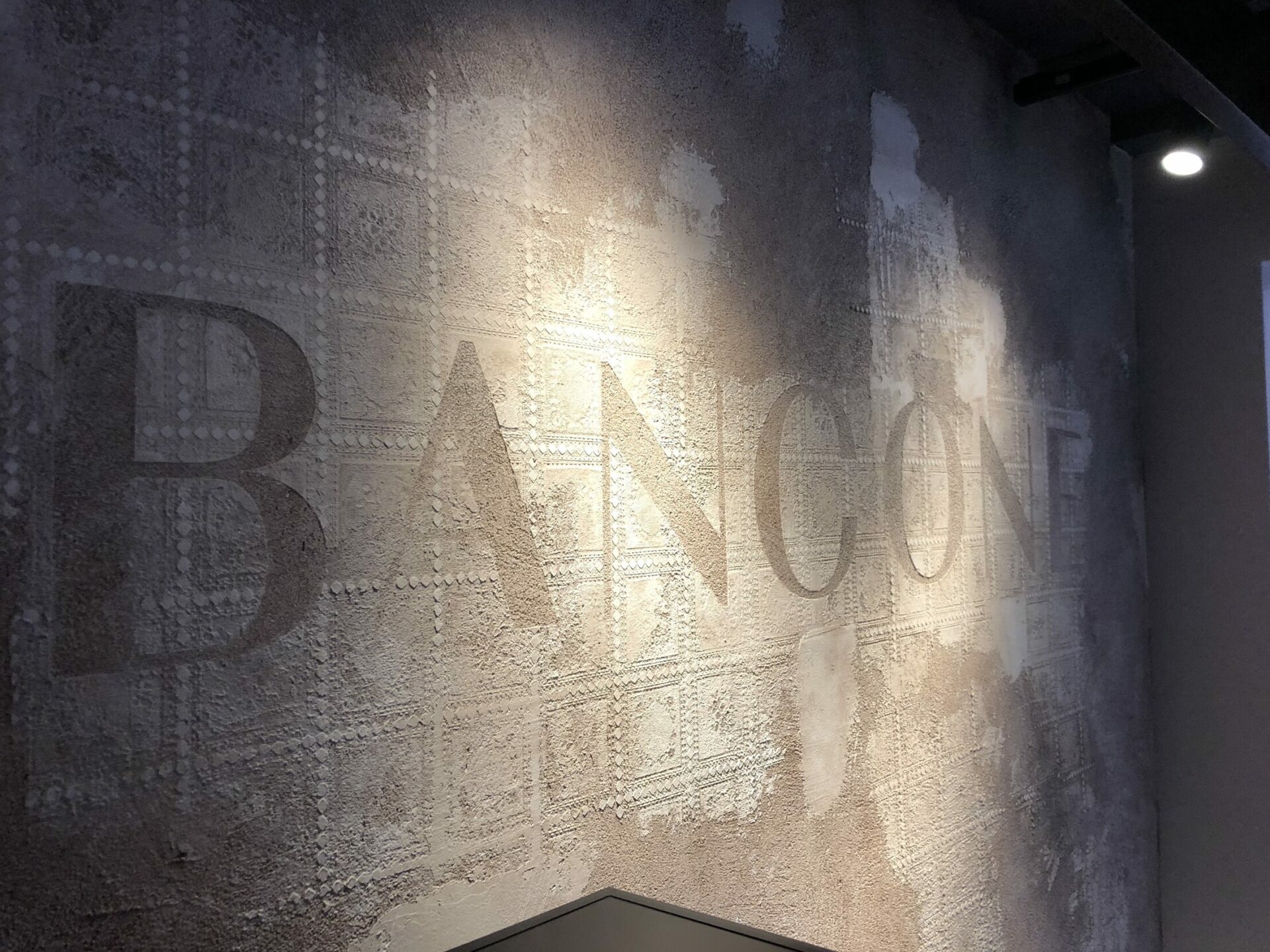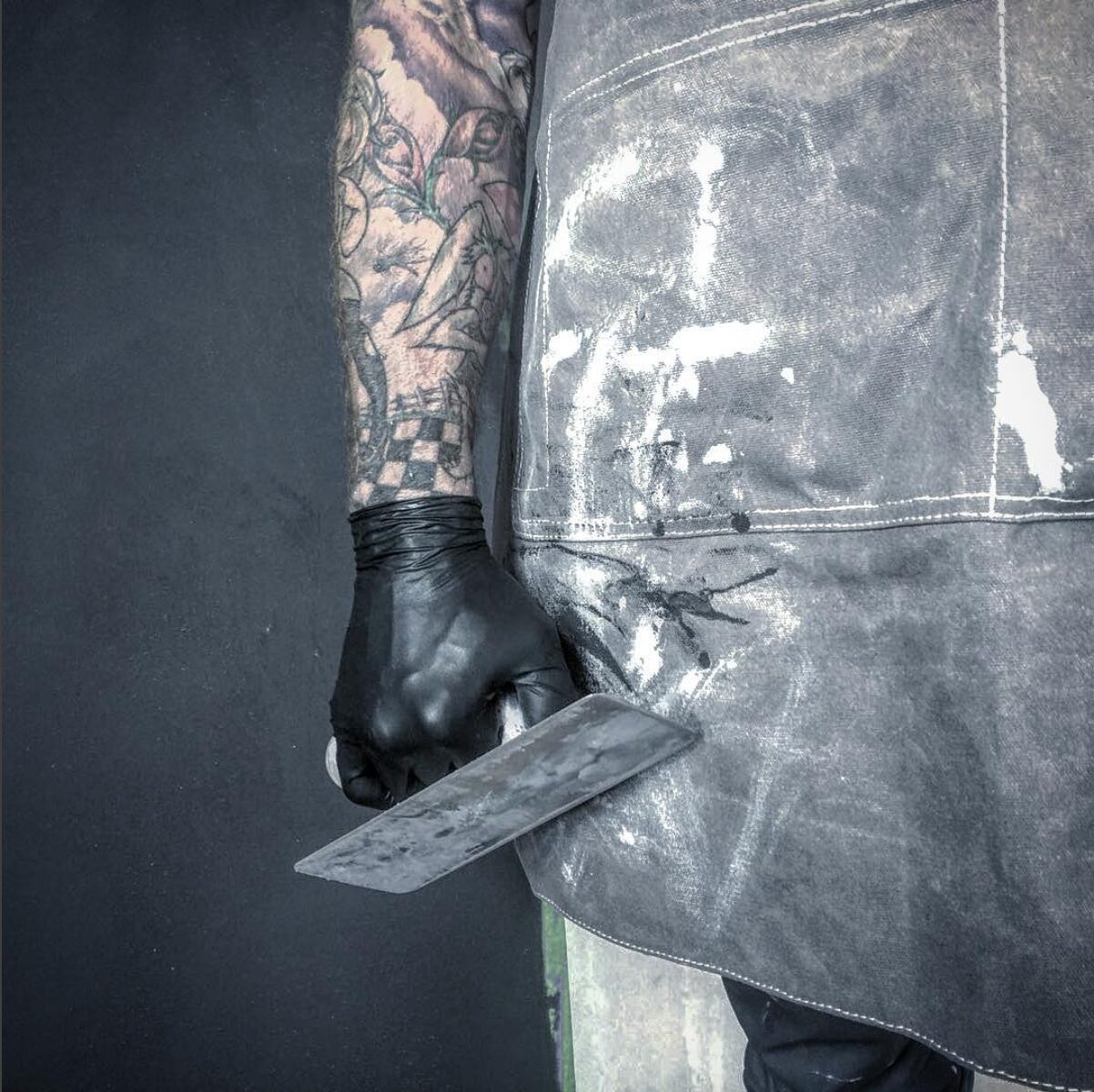
Liquid metal plaster is a hand-applied decorative finish made from real metal powders like copper, bronze, brass, and tin. It creates an authentic metal surface on walls, ceilings, and furniture, and it is one of the most striking finishes available for luxury interiors in the UK. At Hikitia Surface Design, we have over 20 years of experience installing liquid metal finishes across London and Kent. Explore the rest of our website or get in touch for a free quote.
Table of Contents
- What Is Liquid Metal Plaster?
- How Does Liquid Metal Plaster Differ from Metallic Venetian Plaster?
- How Is Liquid Metal Plaster Applied?
- How Much Does Liquid Metal Plaster Cost in the UK?
- What Metals and Finishes Are Available?
- Where Can Liquid Metal Plaster Be Used?
- Top 10 Benefits of Choosing Liquid Metal Plaster
- Common Mistakes to Avoid with Liquid Metal Plaster
- How Does Liquid Metal Compare to the Alternatives?
- How Long Does Liquid Metal Plaster Last?
- Liquid Metal Plaster Trends to Watch in 2026
- Frequently Asked Questions
- Final Thoughts
What Is Liquid Metal Plaster?
Liquid metal plaster is a decorative wall finish made from genuine metal powders, such as copper, bronze, brass, and tin, blended with specialist resin binders. It is applied by hand using trowel techniques similar to Venetian plaster, and the finished surface is actual metal, not a paint that simply looks metallic.
Here is what makes it different from a standard metallic paint:
- It contains real metal powders, not reflective pigments.
- The finished surface can be polished, brushed, aged, or textured.
- It can develop a natural patina over time, just like solid metal.
- It is applied to walls, ceilings, doors, columns, furniture, and more.
One of the leading products in this space is Metallo Fuso by Novacolor, an Italian manufacturer of high-end decorative coatings. Metallo Fuso is a decorative coating made from selected metal alloy powders mixed into a bi-component epoxy resin. The name translates from Italian as “fused metal,” and that is exactly what the result looks like.
At Hikitia Surface Design, we use Novacolor materials and have extensive training in liquid metal application techniques. Although liquid metal is not technically a polished plaster, it falls under the wider surface design umbrella and works beautifully when combined with traditional polished plaster finishes.
How Does Liquid Metal Plaster Differ from Metallic Venetian Plaster?
You might be wondering whether liquid metal plaster and metallic Venetian plaster are the same thing. They are not.
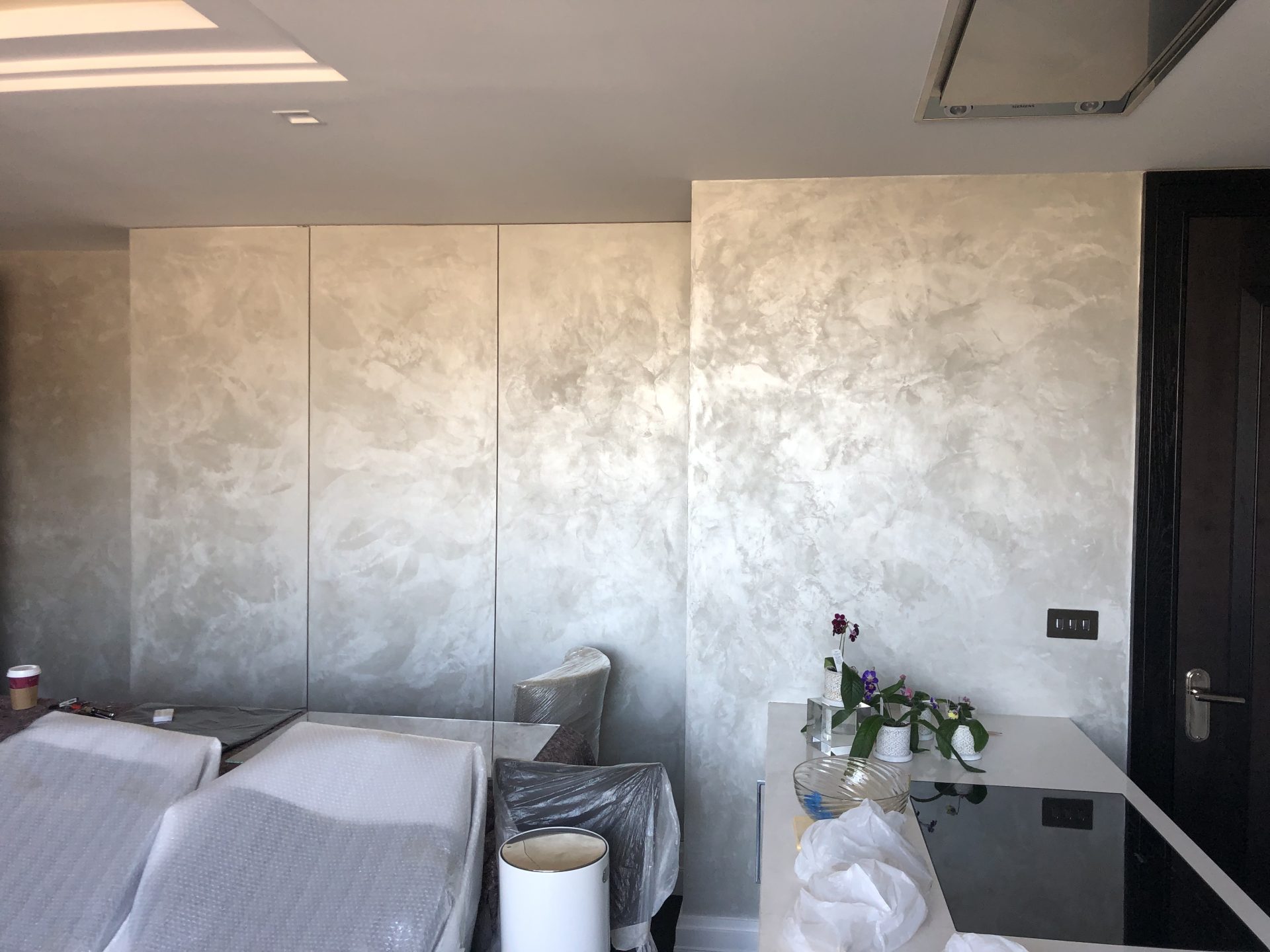
Here is the key difference. Metallic Venetian plaster uses mica or reflective pigments mixed into lime-based plaster. It creates a beautiful shimmer, almost like the glow of a pearl or silk. But the surface is still plaster.
Liquid metal plaster uses real metal powders. The result is a genuine metal surface. You can polish it to a mirror finish, brush it for texture, or age it with a patina. It behaves like metal because it is metal.
Here is a quick comparison:
| Feature | Liquid Metal Plaster | Metallic Venetian Plaster |
|---|---|---|
| What it is made from | Real metal powders and epoxy resin | Lime plaster with mica or reflective pigments |
| Surface feel | Hard, metallic | Smooth, plaster |
| Can it develop a patina? | Yes, real oxidation | No |
| Best suited for | Statement walls, commercial spaces, furniture | Whole rooms, softer metallic glow |
Both finishes are stunning. The right choice depends on the look you are going for and the scale of your project. We install both at Hikitia and are always happy to talk you through the options.
How Is Liquid Metal Plaster Applied?
Liquid metal plaster is a specialist finish. It is not something you can pick up at a DIY shop and apply yourself. The process takes several days and requires trained artisans with experience in trowel-based application.
Here is how the process works, step by step:
Step 1: Surface Preparation. The surface must be clean, dry, stable, and free from dust or loose material. Compatible substrates include plaster, plasterboard, concrete, MDF, and existing painted walls.
Step 2: Priming. A specialist primer is applied to ensure the metal coating bonds properly to the surface.
Step 3: Mixing. The liquid metal is a two-component system. Metal powder is combined with a resin binder. The consistency can be adjusted with water, ranging from smooth and creamy to thick and textured, depending on the finish style.
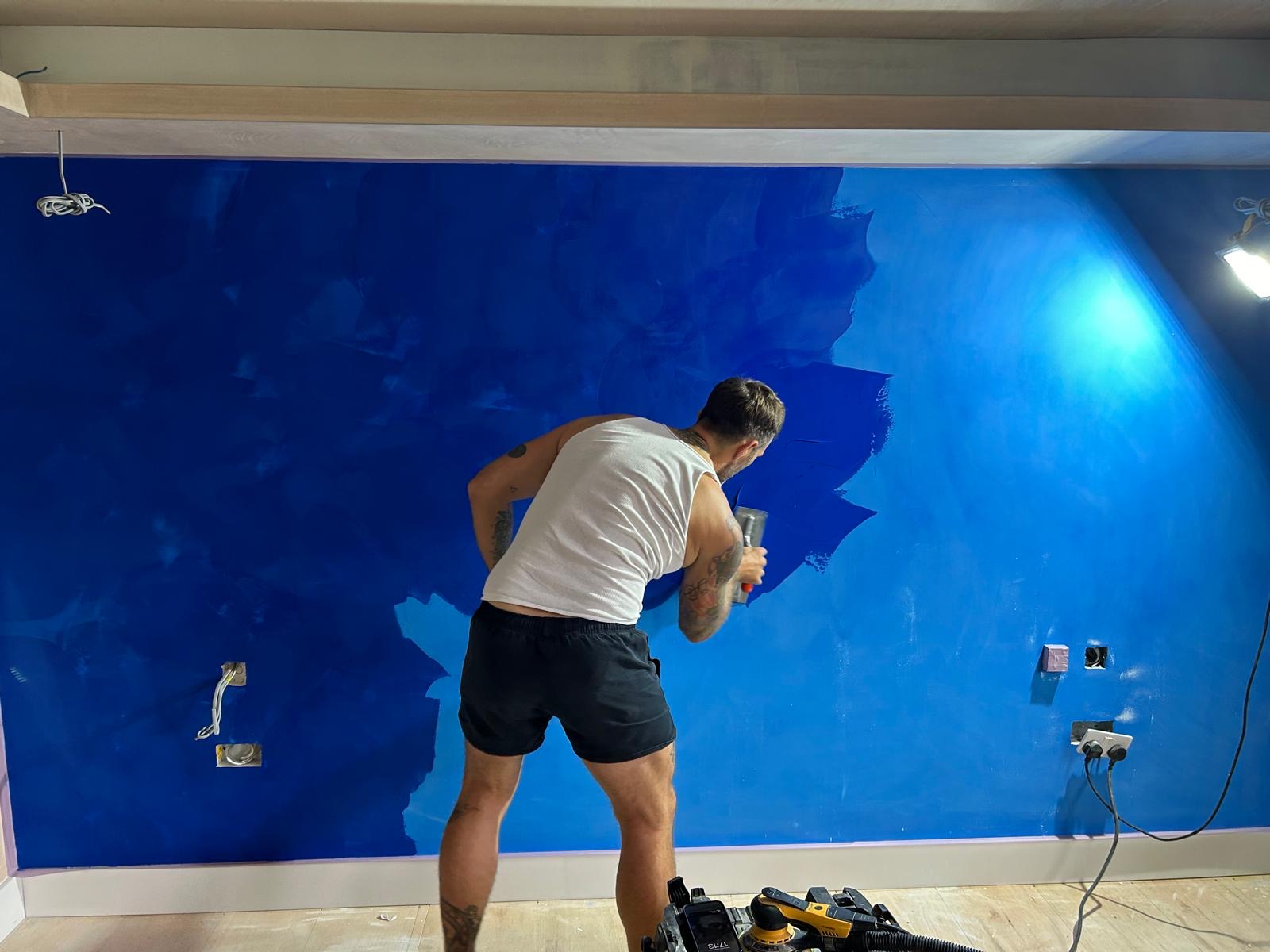
Step 4: Trowel Application. The metal is applied by hand using Venetian plaster trowels. Multiple thin layers are built up. The applicator controls the movement, texture, and direction of the metal to create the desired effect.
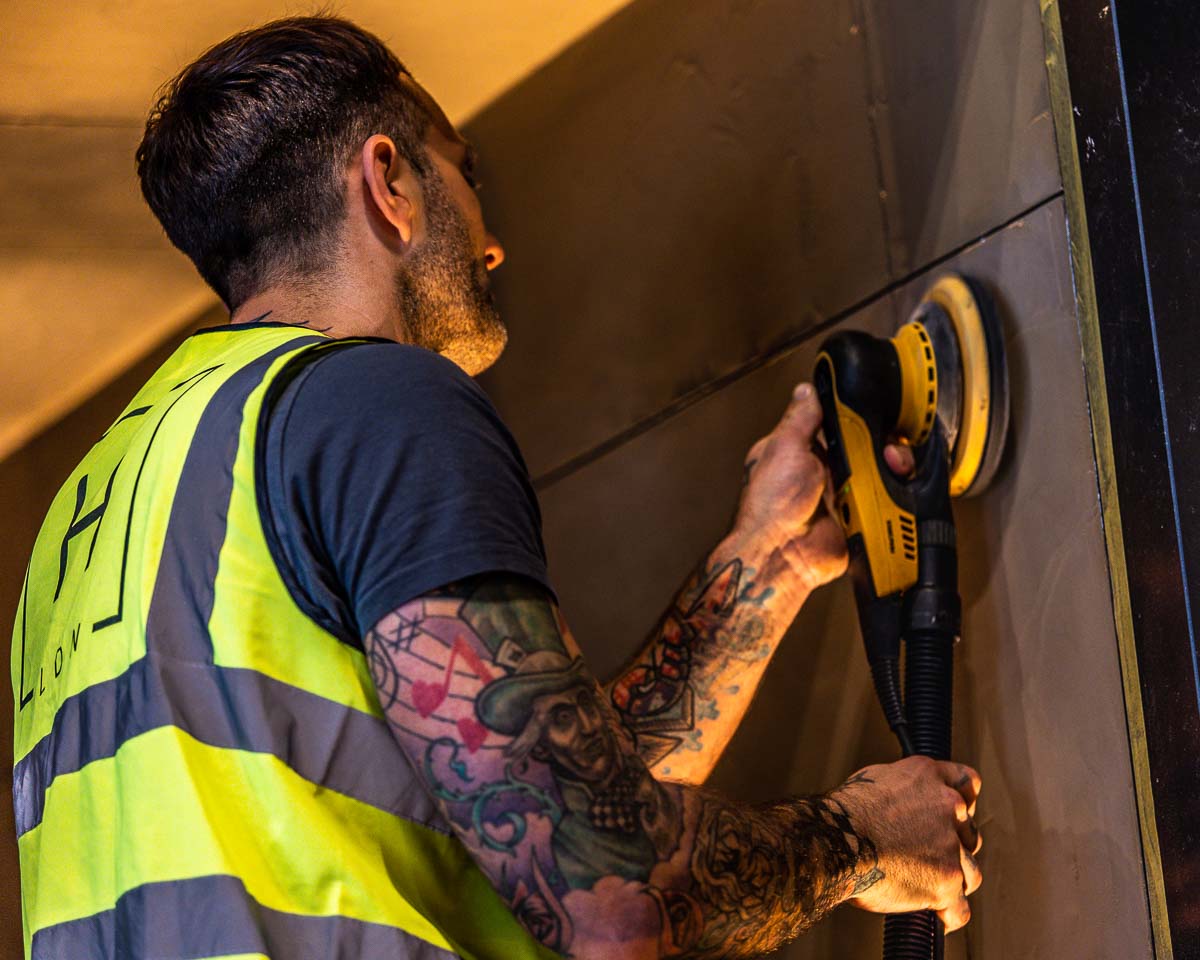
Step 5: Polishing. This is the most labour-intensive stage. Hours of hand polishing are needed to achieve the highest possible shine. At Hikitia, this stage is where the real artistry comes through.
Step 6: Patina or Ageing (Optional). Chemical patinas can be applied to create an aged, weathered look. Copper can be given a verdigris effect. Bronze can be darkened. Iron can be rusted. These effects can make the surface look as though it has been weathering for years.
Step 7: Sealing. A protective sealant is applied to lock in the finish and protect the surface.
A single feature wall typically takes between 3 and 7 working days, including drying time between coats.
How Much Does Liquid Metal Plaster Cost in the UK?
Here is the thing. Nobody else in the UK is publishing realistic installed cost guidance for liquid metal plaster. So let us be upfront about it.
Liquid metal is towards the more expensive end of the decorative finishes we offer at Hikitia. The materials themselves carry a high price, and the labour intensity is significant.
Here are the key factors that affect cost:
- Metal type. Copper and bronze typically cost more than tin or aluminium.
- Finish complexity. A high-polish mirror finish requires far more labour than a brushed or textured effect.
- Surface condition. Walls that need extensive preparation add time and cost.
- Location. London and the South East carry higher labour rates than other parts of the UK. Typical London prices for polished plaster run 15 to 25 per cent higher than the UK average.
- Scale. Larger areas can bring down the per-square-metre rate slightly.
- Patina effects. Ageing or oxidation treatments add an additional process.
For general context, standard Venetian plaster in London typically ranges from around £45 to £150 per square metre depending on the finish. Liquid metal sits above this range due to the premium materials and labour involved.
The best way to get an accurate figure is to request a quote directly. We will discuss your project, produce tailored samples, and provide a clear price based on your exact requirements.
What Metals and Finishes Are Available?
At Hikitia, we use elemental metals and can also create custom alloys for bespoke projects. Here are the main options:
- Copper. Warm, rich tones. Can develop a natural verdigris patina over time.
- Bronze. Classic warm brown-gold. Popular for statement walls and furniture.
- Brass. Bright gold tone. Works beautifully in Art Deco and contemporary schemes.
- Tin. Cooler, silvery finish. Suits modern and industrial design.
- Aluminium. Cool, contemporary, and the lightest option.
- Custom alloys. We have created bespoke metal blends for projects that need something truly unique.
Each metal can be finished in different ways:
- High polish, for a mirror-like surface
- Brushed or directional texture
- Aged or patinated, for a weathered look
- Textured or hammered
- Oxidised, with deliberate corrosion effects
We always recommend requesting physical samples before making a final decision. Metal finishes look completely different under warm lighting compared to cool lighting. Viewing samples in your actual space is the best way to choose. Enquire about a sample today.
Where Can Liquid Metal Plaster Be Used?
One of the things we love about this material is its versatility. Liquid metals can be used almost anywhere.
At Hikitia, we have installed liquid metal on:
- Feature walls in homes, restaurants, and hotels
- Ceilings, including in bathroom settings
- Doors and doorframes
- Columns and pillars
- Reception desks and bar fronts
- Bespoke furniture, including tables and cabinets
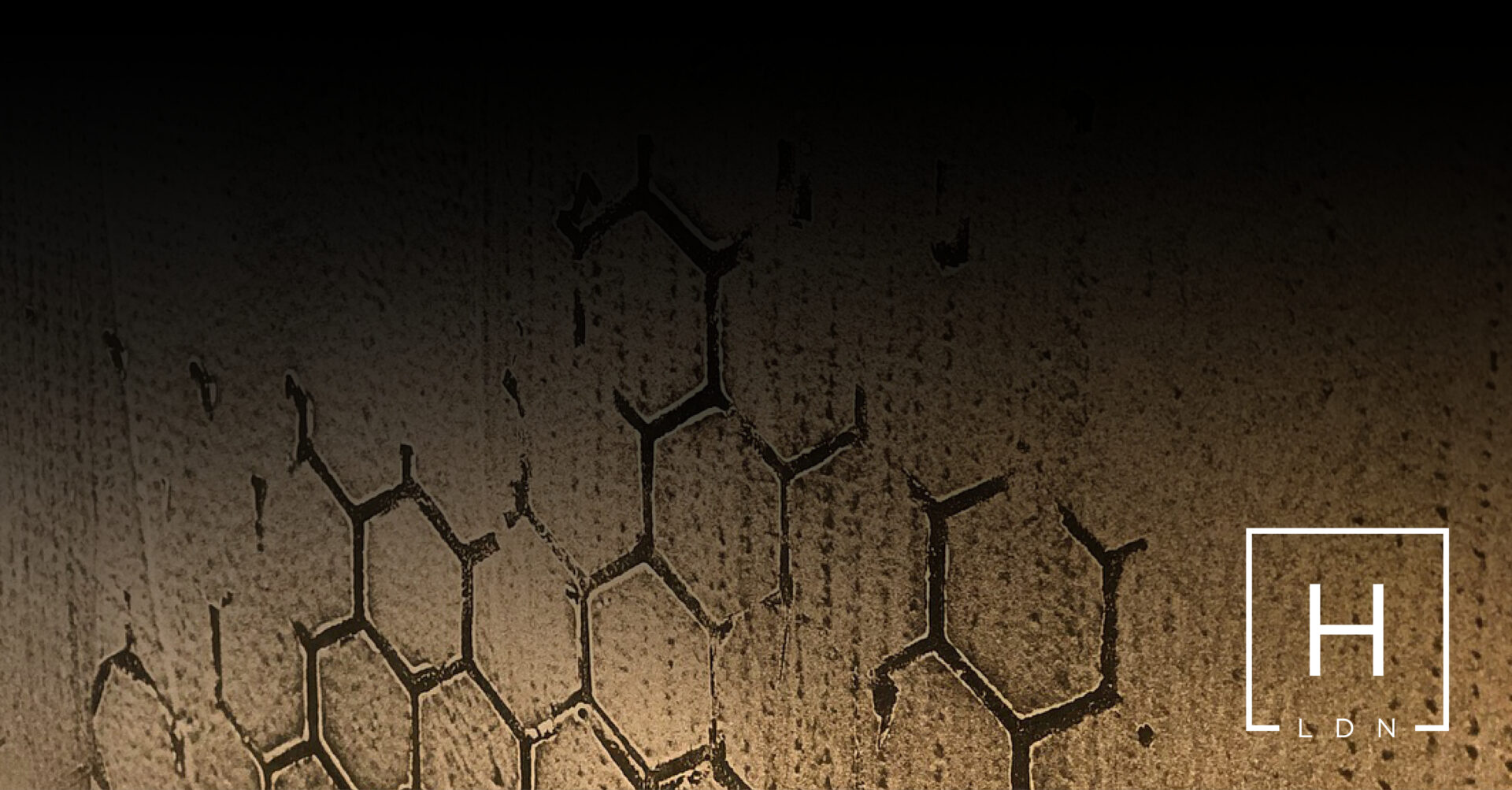
- Logo and branding stencils applied directly into the metal surface
Can you use liquid metal plaster in a bathroom? Yes, with some caveats. It works well on bathroom walls and ceilings when properly sealed. However, it is not recommended for direct water contact inside a shower. For wet zones, you may want to pair a liquid metal ceiling or accent wall with a waterproof alternative. Our Venetian plaster bathroom guide covers more on wet-area finishes.
Top 10 Benefits of Choosing Liquid Metal Plaster
- It is real metal. The finished surface is genuine metal, not a paint effect or a pigmented plaster.
- Every piece is one of a kind. Each wall is hand-applied by an artisan, so no two finishes are ever identical.
- It works on almost any surface. Walls, ceilings, furniture, MDF, plaster, concrete, and more.
- It is lighter than sheet metal. A fraction of the weight, with no structural concerns.
- Finishes are fully customisable. Polished, brushed, aged, oxidised, or textured.
- It is extremely durable. Independent testing on comparable cold-applied metal coatings by VeroMetal showed zero breakdown over the equivalent of 30 years.
- Seamless finish. No joins, no rivets, no visible fixings.
- Patina potential. The surface can develop character over time or be accelerated for an instant aged look.
- Eco-friendly options. Water-based binder systems are available, reducing VOCs and environmental impact.
- Dramatic visual impact. Few finishes can transform a space as instantly and completely as liquid metal.
Common Mistakes to Avoid with Liquid Metal Plaster
Having worked in this field for over 20 years, here are the mistakes we see most often.
Choosing price over quality. The cheapest quote is rarely the best value. Liquid metal is unforgiving. Mistakes are visible and costly to fix. Low prices usually mean inferior materials or inexperienced applicators.
Skipping surface preparation. Poor prep leads to adhesion failure. The surface must be clean, dry, stable, and properly primed before any metal goes on.
Expecting a DIY result. This is a specialist artisan finish. Even experienced plasterers need specific training in liquid metal application. It is not something that can be learned from a YouTube video.
Not requesting samples first. Every metal and finish looks different in situ. Always request physical samples and view them under the lighting conditions in your space before committing.
Rushing the timeline. Multiple coats, drying time, and extensive polishing mean a feature wall takes 3 to 7 working days. Trying to speed this up will compromise the result.
How Does Liquid Metal Compare to the Alternatives?
If you are weighing up your options, here is how liquid metal stacks up against other metallic finish types:
| Feature | Liquid Metal Plaster | Metallic Venetian Plaster | Metal Leaf (Gold/Silver) | Sheet Metal Cladding | Metallic Paint |
|---|---|---|---|---|---|
| Real metal? | Yes | No | Yes (thin foil) | Yes | No |
| Seamless? | Yes | Yes | Depends on skill | No (visible joins) | Yes |
| Durability | Very high | High | Moderate | Very high | Low to moderate |
| Weight | Low | Low | Negligible | Heavy | Negligible |
| Develops patina? | Yes | No | Can tarnish | Yes | No |
| Best for | Feature walls, furniture, commercial | Whole rooms, residential | Small accent details | Exterior cladding | Budget refresh |
Each option has its place. Liquid metal plaster sits firmly in the premium, bespoke end of the market. If you want a genuine metal surface without the weight and limitations of sheet metal, it is hard to beat.
For a full overview of our decorative finishes, visit our finishes library.
How Long Does Liquid Metal Plaster Last?
Liquid metal plaster is considered a lifetime finish. It is significantly more durable than paint and comparable to sheet metal in longevity.
Independent ASTM testing on comparable cold-applied metal coatings has shown zero degradation over the equivalent of 30 years. With proper care, your liquid metal finish should last decades.
Basic maintenance tips:
- Dust regularly with a soft, dry cloth.
- Clean with a damp microfibre cloth. Avoid abrasive cleaners.
- Re-seal every 3 to 5 years in high-traffic areas, or as advised by your installer.
- Check sealant integrity annually in wet-adjacent areas like bathrooms.
- Avoid harsh chemicals, solvents, or scouring pads.
- Minor scratches can usually be buffed out by a specialist.
Compare that to repainting every 3 to 5 years, and the long-term value becomes clear.
Liquid Metal Plaster Trends to Watch in 2026
The decorative finishes world is evolving. Here is what we are seeing in 2026.
Aged and patinated metals are in demand. Designers are moving away from pristine high-shine towards deliberately weathered, lived-in metals. Oxidised copper and darkened bronze feel organic and grounded. This aligns with the broader shift towards natural, characterful interiors.
Combining liquid metal with Venetian plaster. Mixed-material walls are gaining traction. A liquid metal panel paired with surrounding polished plaster creates contrast and depth without overwhelming a room.
Metal on furniture and joinery. We are seeing increasing demand for liquid metal on reception desks, kitchen islands, built-in shelving, and door fronts. This extends the material beyond walls into three-dimensional design.
Sustainable, water-based systems. Newer formulations use water-based binders that reduce VOCs. This matters as sustainable luxury continues to shape UK interior design.
Dark metals and gunmetal tones. Moody, rich metal tones like gunmetal, dark pewter, and blackened bronze are rising alongside the broader trend for cocooning, warm colour palettes.
As the British Institute of Interior Design (BIID) continues to highlight sustainability and craftsmanship, finishes like liquid metal plaster sit perfectly at the intersection of both.
Frequently Asked Questions
What is liquid metal plaster? Liquid metal plaster is a decorative finish made from real metal powders, such as copper, bronze, brass, or tin, mixed with a resin binder. It is applied by hand like Venetian plaster and creates a genuine metallic surface on walls, ceilings, and furniture. It is used in luxury residential and commercial interiors.
Is liquid metal plaster the same as Venetian plaster? No. While it uses similar trowel application techniques, liquid metal plaster contains actual metal powders and creates a real metal surface. Venetian plaster is lime-based with marble dust. Metallic Venetian plaster uses reflective mica pigments for shimmer, but it is still plaster, not metal.
Can liquid metal plaster be used in bathrooms? Yes, on bathroom walls and ceilings when properly sealed. It is not recommended for areas with direct, sustained water contact such as inside showers. For wet zones, consider pairing liquid metal with a waterproof microcement or tadelakt system.
Can you apply liquid metal plaster yourself? This is not a DIY finish. It requires specialist training, professional-grade materials, and significant experience with trowel application and metal polishing techniques. Always hire a trained specialist.
Does liquid metal plaster go green or rusty over time? Only if you want it to. Copper finishes can develop a natural verdigris patina, and iron can develop rust. But these effects are controlled through sealing. A properly sealed finish will maintain its appearance. Many clients actively request patina effects for an aged, characterful look.
What surfaces can liquid metal plaster be applied to? Almost any stable, properly prepared surface. This includes plastered walls, plasterboard, concrete, MDF, timber, and even existing painted surfaces. At Hikitia, we have installed it on walls, ceilings, columns, doors, reception desks, bar fronts, and bespoke furniture.
How long does liquid metal plaster take to install? A single feature wall typically takes between 3 and 7 working days, including drying time between coats. Larger projects or complex finishes will take longer. We always discuss timelines during the quoting stage.
Final Thoughts
Liquid metal plaster is one of the most dramatic, luxurious finishes available for interiors today. It is real metal, hand-applied by artisan craftspeople, and the result is a surface that no paint, wallpaper, or standard plaster can replicate.
It is not the cheapest option. It is not the quickest. But if you want a one-of-a-kind finish that will last decades and transform the feel of a space, very few materials come close.
At Hikitia Surface Design, we have been creating bespoke surface finishes across London, Kent, Surrey, and Essex for over 20 years. Our materials come from Italy, our artisans train with the best, and every project we take on is treated as a unique piece of work.
If you are considering liquid metal for your next project, whether it is a feature wall, a reception desk, a restaurant interior, or something else entirely, we would love to hear from you.
Get in touch for a free, no-obligation quote or request a sample to see how these metals look in your space.