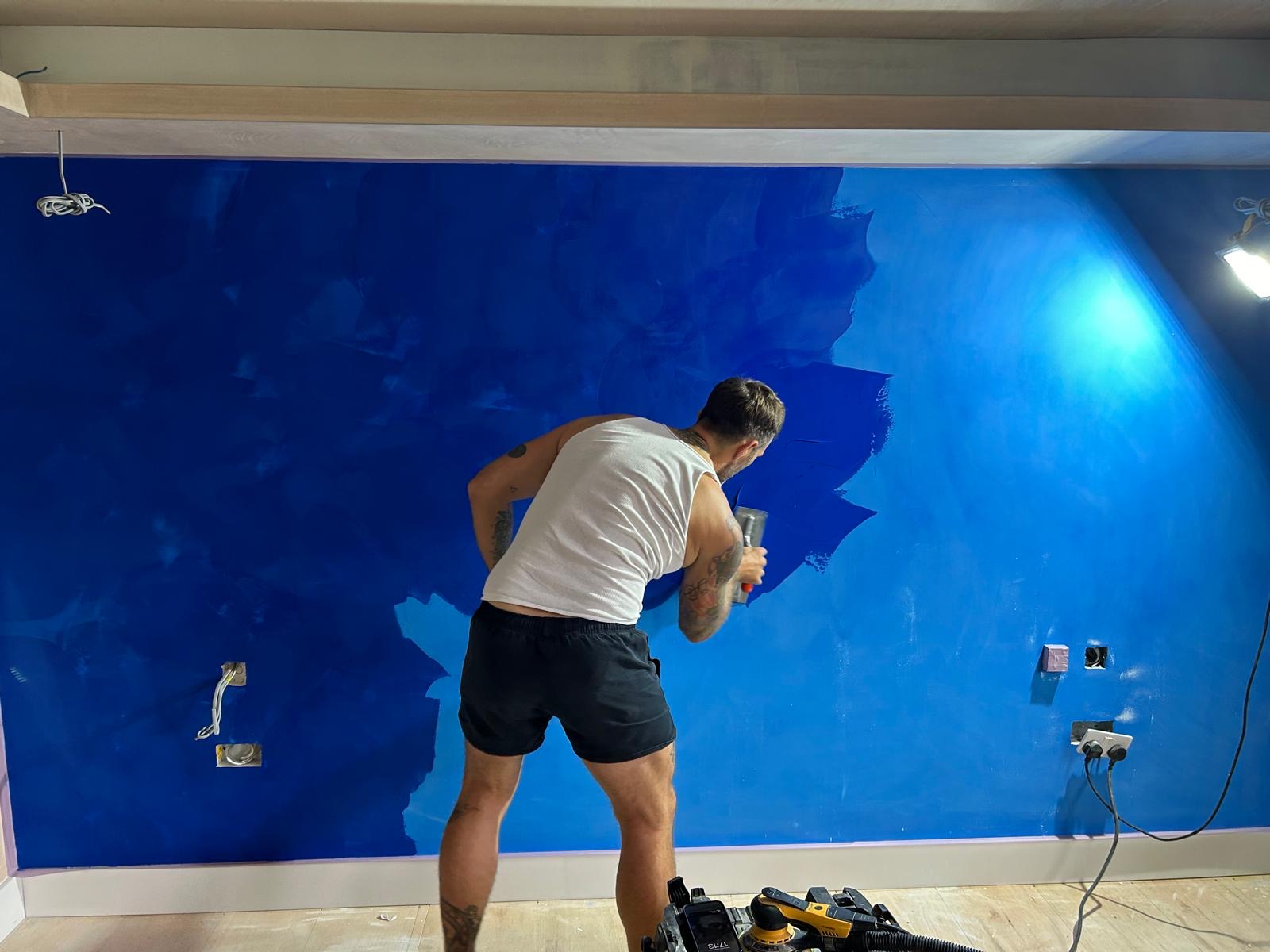
Venetian plaster in London is everywhere right now. Walk into any newly opened restaurant in Soho, any refurbished hotel lobby in Mayfair, or any design-led home in Notting Hill, and you will see those luminous, marble-like walls that paint simply cannot replicate.
But if you are specifying venetian plaster for the first time, or planning a venue fit-out and weighing up your options, the questions stack up fast. What does it actually cost? Which finish suits your space? And how do you find a specialist who will deliver the result your project deserves?
This guide covers all of it. From the different types of finish available, to realistic London pricing, to a step-by-step breakdown of how to choose and commission a venetian plaster specialist. Whether you are an interior designer, a restaurant owner, or a homeowner with ambitious taste, you will find what you need here.
What Is Venetian Plaster (And Why Is London Obsessed With It)?
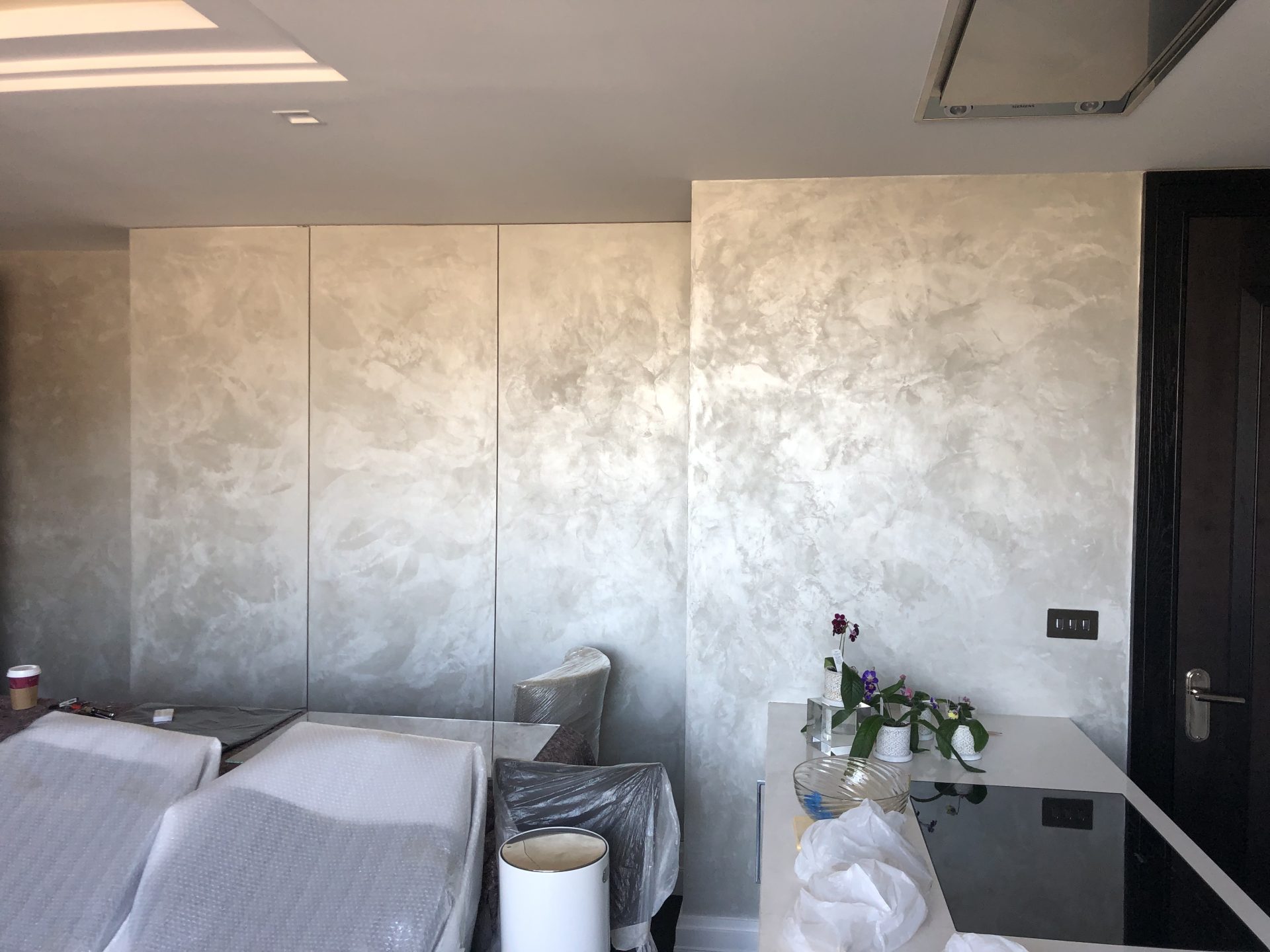
Venetian plaster is a decorative wall finish made from slaked lime putty and fine marble dust, applied in multiple thin layers and burnished by hand to create a smooth, polished surface with natural depth and movement. Unlike paint or wallpaper, each application is unique. The way light catches a venetian plaster wall changes throughout the day, creating a sense of texture and richness that flat finishes cannot match.
The technique dates back over 2,000 years to ancient Rome, where it was used to mimic the appearance of solid marble at a fraction of the weight and cost. The principles have barely changed since. What has changed is the range of finishes now available, from high-gloss polished surfaces to rough, industrial concrete effects.
So why is London so taken with it? Three reasons. First, it is genuinely durable. A properly applied venetian plaster finish will outlast painted walls by decades. Second, it is eco-friendly: authentic lime-based plasters are VOC-free, naturally antibacterial, and actually absorb CO₂ as they cure. Third, nothing else delivers the same visual impact. For designers and venue owners looking to create spaces that feel premium and distinctive, venetian plaster is hard to beat.
The key distinction to understand: authentic venetian plaster uses natural lime and marble dust. Faux alternatives based on acrylics or synthetic resins look similar in photos but lack the depth, breathability, and longevity of the real thing. Always ask your specialist what materials they use.
Popular Venetian Plaster Finishes for London Interiors
Choosing the right finish is one of the most important decisions in any venetian plaster project. Each type has a distinct look and set of practical properties. Here is a breakdown of the most popular options specified in London right now.
| Finish | Look and Feel | Best For | Sheen Level |
| Marmorino | Smooth, polished, marble-like depth | Statement walls, luxury residential | High gloss |
| Tadelakt | Soft, organic texture with a natural sheen | Bathrooms, wet rooms, restaurant washrooms | Satin |
| Microcement | Seamless, contemporary concrete look | Modern fit-outs, retail, floors | Matte to satin |
| Liquid Metal / Metallics | Dramatic, textured with metallic lustre | Feature walls, bars, reception areas | Varies |
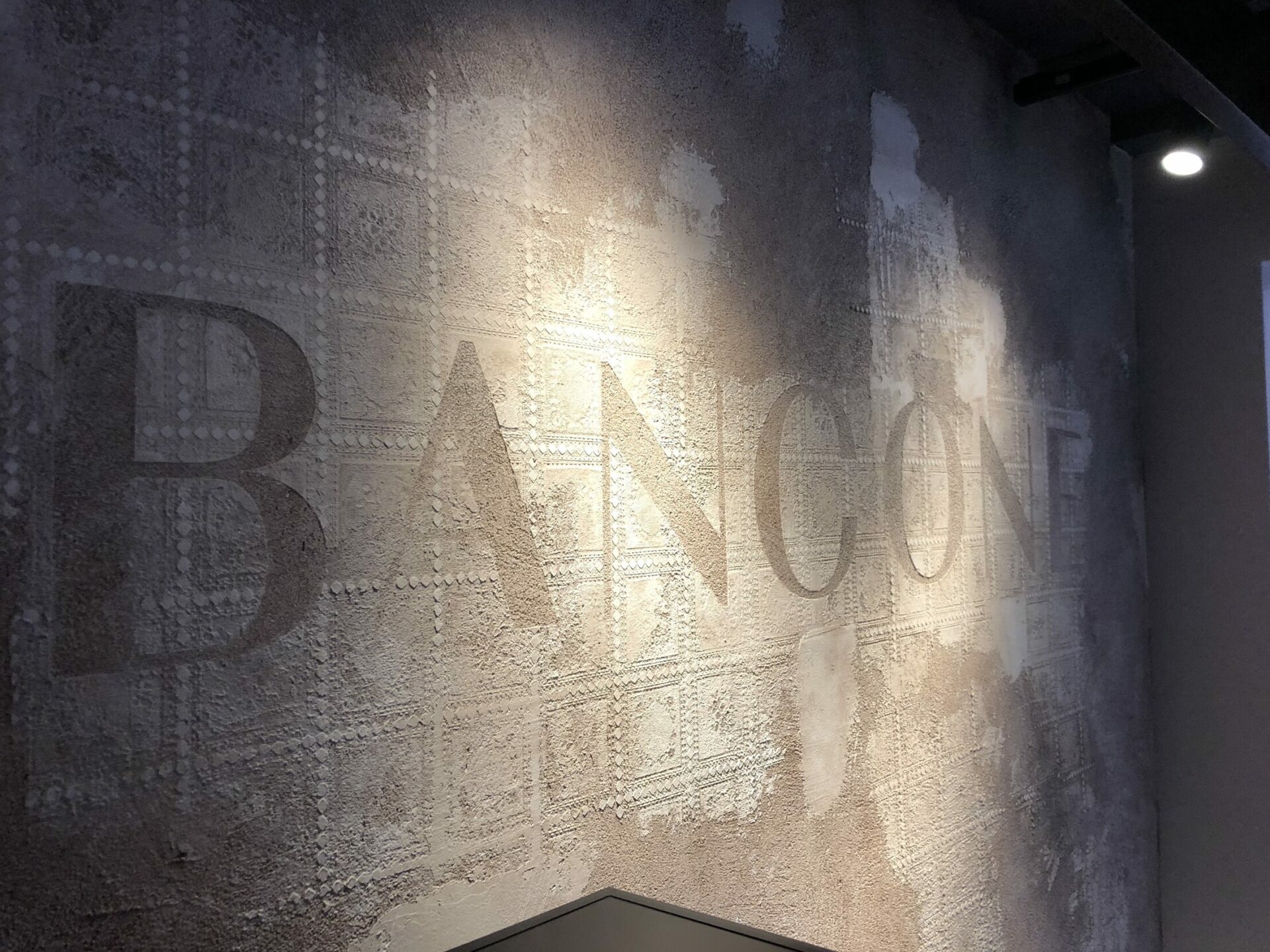
| Concrete Effect | Raw, industrial-luxe appearance | Restaurants, retail, urban residential | Matte |
A quick decision framework for designers: if your brief calls for warmth and heritage, marmorino is the natural choice. Need waterproofing? Tadelakt. Going for a contemporary, pared-back look? Microcement or concrete effect. Want drama and a talking point? Liquid metal finishes deliver it.
Not sure which finish fits your project? Explore our full range of finishes or get in touch and we will create bespoke samples to match your design brief.
How Much Does Venetian Plaster Cost in London?
Venetian plaster in London typically costs between £45 and £150+ per square metre, supplied and installed. The exact price depends on the finish you choose, the complexity of the application, the condition of your surfaces, and the size of the project. London and the South East carry a 15 to 25% premium over national averages due to higher labour and material logistics costs.
Here is what moves the needle on price:
- Finish complexity: A high-gloss marmorino with multiple burnished coats costs more than a simple matte concrete effect. More coats means more labour.
- Colour depth: Darker colours (blacks, deep blues, rich reds) require significantly more pigment to turn the naturally off-white plaster, which increases material costs.
- Surface preparation: If your walls need extensive repair, skimming, or priming before the plaster can go on, that adds to the total.
- Access and logistics: High ceilings, scaffolding, or tight London site access all increase the price.
- Minimum order values: Most specialists apply a minimum charge for small projects, so a single feature wall will cost more per m² than a full room.
How Does Venetian Plaster Compare to Other Finishes?
| Wall Finish | Typical Cost (per m²) | Lifespan |
| Standard paint | £5 to £15 | 3 to 5 years |
| Wallpaper (mid-range) | £20 to £60 | 5 to 10 years |
| Venetian plaster | £45 to £150+ | 20+ years |
| Natural stone cladding | £100 to £300+ | 30+ years |
When you factor in longevity, venetian plaster sits in a sweet spot. It delivers the visual impact of natural stone at a lower price point, and it will outlast paint many times over. For restaurant owners and property developers, the long-term maintenance savings are significant.
These figures are indicative. Every project is different, so we always recommend getting a bespoke quote based on a site visit.
Venetian Plaster for Restaurants and Hospitality Venues
Venetian plaster is one of the best wall finishes for restaurants and hospitality venues. It is exceptionally durable in high-traffic environments, easy to clean, naturally resistant to mould and bacteria, and adds a sense of quality that diners and guests notice immediately.
For restaurant owners planning a fit-out or refurbishment in London, here is why it works so well in your environment:
- Durability that matches your footfall. A properly applied venetian plaster wall will withstand years of service without the scuffing, chipping, and discolouration that painted walls suffer in busy venues. You will not need to repaint every few years.
- Hygiene credentials. Lime-based plaster is naturally antibacterial and VOC-free. It does not harbour mould or release harmful chemicals. For venues where food hygiene standards matter, this is a genuine advantage.
- Minimal disruption during installation. Experienced specialists can work around your trading hours. Overnight installs, phased scheduling, and close coordination with other trades are all standard practice on commercial projects.
- Perceived value. Your walls are the largest surface area in any venue. Venetian plaster instantly elevates the dining experience and signals quality to your customers. It photographs beautifully too, which matters in the age of Instagram.
At Hikitia, we have completed venetian plaster installations for the Hilton Hotel, Maroto restaurant, Happy Bar and Grill, and a growing list of London hospitality venues. Each project was delivered on schedule, with overnight working where needed, and in close collaboration with the main contractor and design team. You can see our recent projects in the gallery.
How to Choose a Venetian Plaster Specialist in London
Not all venetian plaster companies deliver the same quality. The difference between a stunning finish and a disappointing one comes down to the skill of the applicator and the materials they use. Here is a seven-point checklist to help you choose well.
- Check their training and provenance. Where did they learn their craft? The gold standard is training in Italy, where the techniques originated. Ask about the specific institutes or masters they trained under. Vague claims of experience are not enough.
- Review their portfolio closely. Look for completed projects similar to yours in scale, finish type, and setting. A specialist with a strong residential portfolio might not have the commercial experience your restaurant fit-out requires, and vice versa.
- Ask about the sample process. A reputable specialist will produce bespoke samples before any work begins. You should be able to see and feel the exact finish, colour, and sheen level before committing. If a company skips this step, walk away.
- Confirm the materials. Are they using authentic Italian lime-based plasters, or synthetic alternatives? Genuine materials cost more but deliver a superior finish with better longevity and breathability.
- Ask about commercial logistics (for venues). Can they work overnight? Coordinate with your builder and other trades? Handle tight programme deadlines without compromising quality?
- Request references. Speak to interior designers, architects, or previous clients they have worked with. Reliable specialists are happy to share references because their work speaks for itself.
- Get a detailed, transparent quote. Be cautious of anyone who quotes without a site visit. A proper quotation should break down costs by area, finish, surface preparation, and any additional requirements.
At Hikitia, our artisans train in Italy and bring over 20 years of hands-on experience to every project. That training is not just a line on a website. It is the difference between a finish that looks flat and lifeless and one that has real depth, movement, and character. The techniques we learned from Italian masters inform every layer we apply, from surface preparation through to the final burnish.
What to Expect: The Venetian Plastering Process
If you have never commissioned venetian plaster before, the process can feel unfamiliar. Here is what a typical project looks like from first contact to finished walls.
- Consultation and site visit. We visit your site, discuss your vision, assess the surfaces, and talk through which finishes and colours will work best in your space and lighting conditions.
- Sample creation and sign-off. We produce bespoke physical samples in your chosen finish and colour. You review them in situ under your actual lighting. Revisions are made until you are completely happy.
- Surface preparation. This is the foundation of a great finish. Walls are repaired, smoothed, and primed with a specialist primer. Poor prep shows through the final coat, which is why experienced specialists never rush this stage.
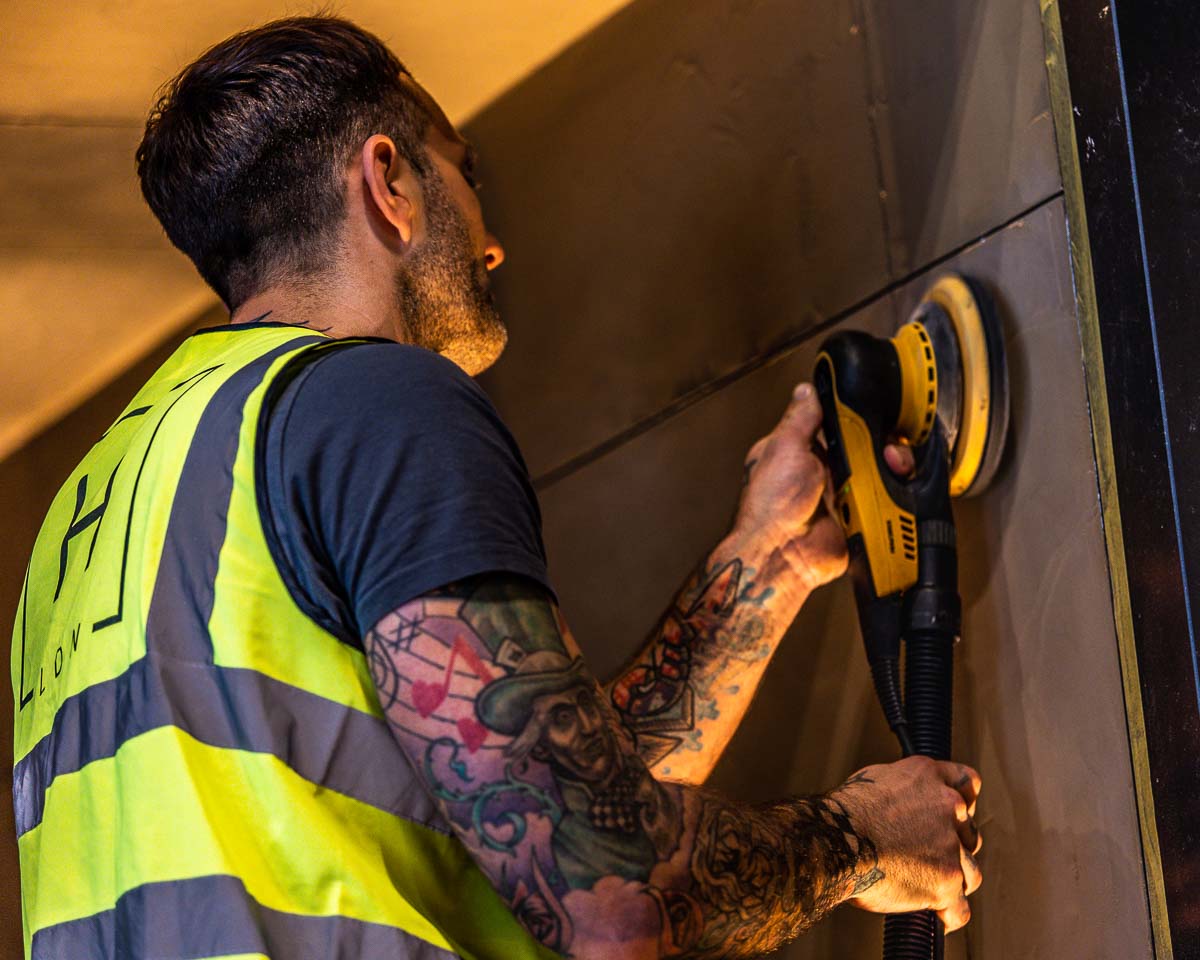
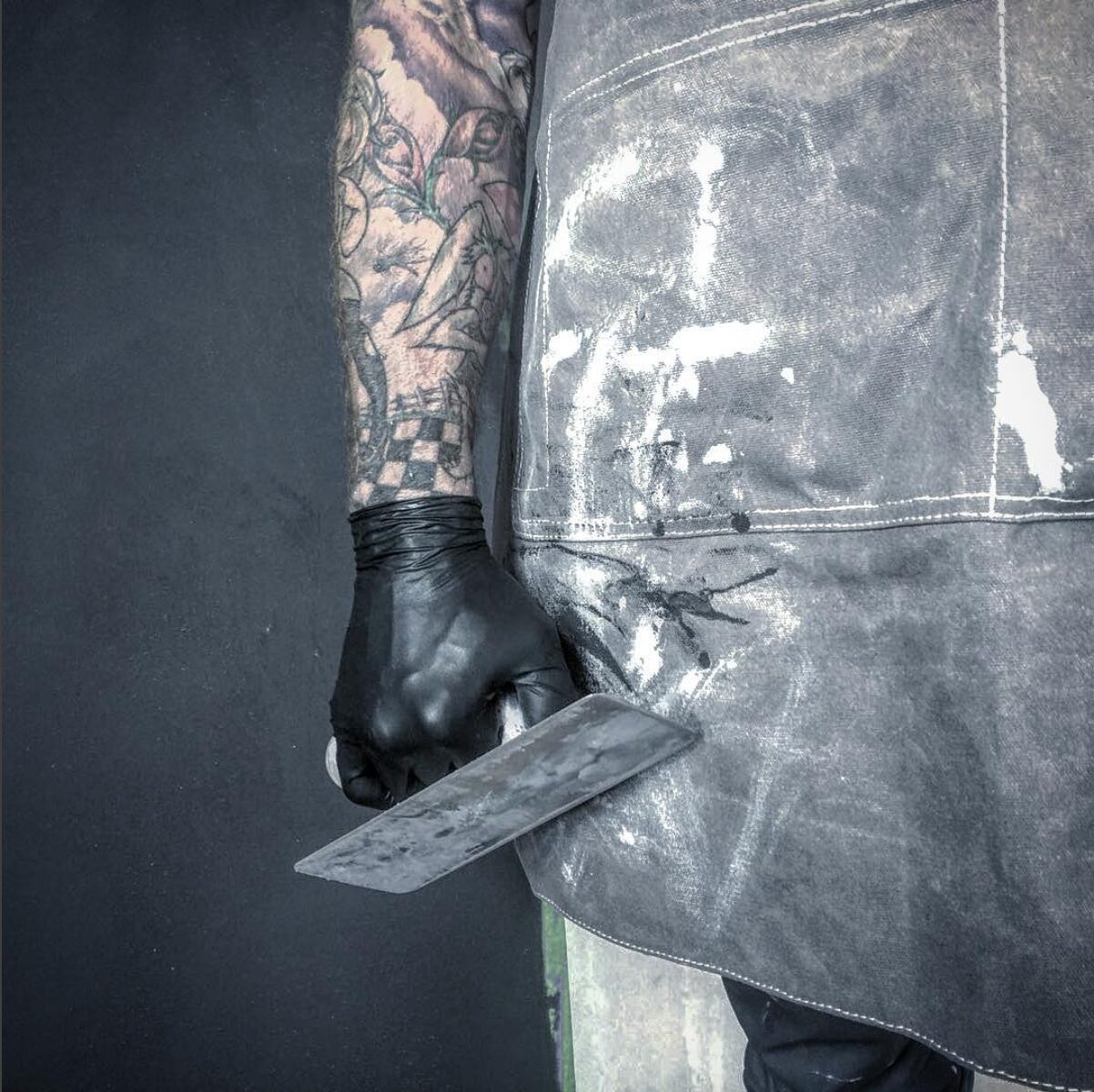
- Application. Multiple thin coats of plaster are applied by hand using a steel trowel or spatula. Each layer is allowed to partially dry before the next is applied. The final coat is burnished to achieve the desired sheen and texture.
- Finishing and protection. Depending on the finish and environment, a protective wax or sealant is applied. For wet areas, Tadelakt finishes include a soap-burnishing step that makes them fully waterproof.
- Aftercare guidance. We provide clear instructions on how to maintain your plaster. Day-to-day care is minimal. A soft cloth and mild soap handle most cleaning.
Timeline varies by project size and finish complexity. A single feature wall might take 3 to 4 days. A full restaurant interior could take several weeks. We will give you a clear programme before any work starts, and we stick to it.
What Is the Difference Between Venetian Plaster and Polished Plaster?
Venetian plaster and polished plaster are closely related, and the terms are often used interchangeably. Venetian plaster refers specifically to the traditional Italian technique using lime putty and marble dust, applied in thin layers and burnished by hand. Polished plaster is a broader category that includes any plaster finish burnished to a sheen, whether lime-based or synthetic.
In practice, if you are searching for a high-quality, authentic finish in London, the distinction matters less than the materials and skill of the applicator. Always ask whether the plaster is genuine lime-based or an acrylic alternative. The look might seem similar in a photo, but the feel, depth, and longevity are markedly different in person.
Frequently Asked Questions About Venetian Plaster
How long does venetian plaster last?
When applied correctly by a specialist, venetian plaster lasts 20 years or more. The lime-based composition actually strengthens over time through a process called carbonation. Compare that to painted walls, which typically need refreshing every 3 to 5 years, and the long-term value becomes clear.
Can venetian plaster be used in bathrooms and kitchens?
Yes. Certain finishes are specifically designed for wet environments. Tadelakt, a traditional Moroccan lime plaster, is naturally waterproof and ideal for bathrooms, wet rooms, and kitchen splashbacks. Standard venetian plaster finishes can also be sealed for use in humid rooms.
Why is venetian plaster so expensive?
The cost reflects two things: premium materials and specialist labour. Authentic venetian plaster uses natural lime and marble dust imported from Italy. Application is entirely by hand, requires multiple coats (each individually burnished), and demands years of training to execute well. A small feature wall can take 3 to 4 days to complete. The result, however, is a finish that lasts decades and looks unlike anything else.
Is venetian plaster eco-friendly?
Venetian plaster is one of the most environmentally friendly wall finishes you can choose. It is made from natural minerals, contains no synthetic chemicals, and emits zero volatile organic compounds (VOCs). The lime in the plaster also absorbs carbon dioxide as it cures, making it a carbon-negative material. Historic England’s guidance on lime-based materials provides further detail on the heritage and environmental credentials of lime plaster.
What venetian plaster finishes are trending in 2026?
Concrete-effect plasters are dominating commercial interiors this year, particularly in restaurants and retail spaces. Earthy, muted tones with a matte or satin finish are in high demand, along with warm terracotta and clay-inspired palettes. Metallic accents, especially oxidised copper and brushed bronze effects, remain popular for feature walls and bar fronts.
Ready to Talk About Your Project?
Venetian plaster transforms ordinary walls into something remarkable. Whether you are an interior designer specifying it for a residential client, or a restaurant owner looking to create a space that stands out, the right specialist makes all the difference.
At Hikitia Surface Design, our Italian-trained artisans have been delivering venetian plaster across London for over 20 years. We work with award-winning architects and designers, and we have the commercial experience to handle hospitality fit-outs with minimal disruption to your business.
Tell us about your project and we will create bespoke samples tailored to your brief, with no obligation. Request a free consultation and let us show you what is possible.
Working on a project that could use venetian plaster? We would love to hear about it.